
For a long time I have been curious about the world a person carries inside.
Why does something so small sometimes touch such a large place within us?
Why is it that when a message does not arrive, we are not only waiting for the message, but for the echo of a much older rejection?
Why do we keep living out, in our minds, relationships we know have ended?
Why do we miss the people who hurt us?
Why do we live the same story again and again with certain people, only with different faces?
Why, while wanting everyone to love us, can we be afraid of truly being seen?
Why does a far more fragile side of us go on living quietly inside, while we look strong from the outside?
Why does such a wide distance sometimes open between who we are and the person we show the world?
And why do some feelings appear in ever stranger forms the harder we try to ignore them?
"Perhaps the only 'I' living inside us is not the one we know.
There are sides we show. There are sides we hide.
There is the person we want to be. There is the person we are afraid of becoming.
And there are things we keep even from ourselves."
Jung and the Journey of Inner Transformation
When Jung looked at this, he did not see a person as consisting of the conscious mind alone.
- Persona: The face we show the world.
- Shadow: The parts we push away from ourselves, the ones we would rather not see.
- The Unconscious: A vast inner world we believe we have forgotten, which goes on shaping us all the same.
And running through all of it was the slow journey of becoming oneself: Individuation.
Perhaps understanding ourselves is not only about working out why we feel a certain way. Sometimes it is meeting a part of ourselves we would rather not admit to. Sometimes it is noticing why we keep living the same story. Sometimes it is asking whether the thing we have called "just the way I am" for years truly belongs to us, or is a role we learned in order to fit the world. And sometimes it is listening, for the first time, to a part we left in the dark instead of trying to destroy it.
Symbols, the Body, and the Language of Dreams
These questions carried me to different places: to psychology, to Jung and the unconscious, to the nervous system, to symbols, to music, to art, to nature, and most of all to my own inner world.
After a while I realised that none of these are entirely separate from one another. Sometimes we feel in a song what psychology has been describing. Sometimes we come to understand a reaction of the body through a concept we only learn years later. Sometimes a dream tells us in symbols what the conscious mind cannot yet say. Sometimes a single line of a song touches a place inside that we have not been able to name for years. Sometimes a symbol says a feeling better than we can.
The Language of the Inner World:
Not only in words • In dreams • In symbols • In repetitions • In relationships • In the body • In art • In music.
After a while I began to think: What if these are all different doors opening onto the same human experience? Because a person is not a single thing. We have our bright sides, we have our shadows, we have the faces we show the world, and we have the sides that surface when no one is watching. And perhaps the point is not to erase the darkness within, but to recognise it too as a part that belongs to us.
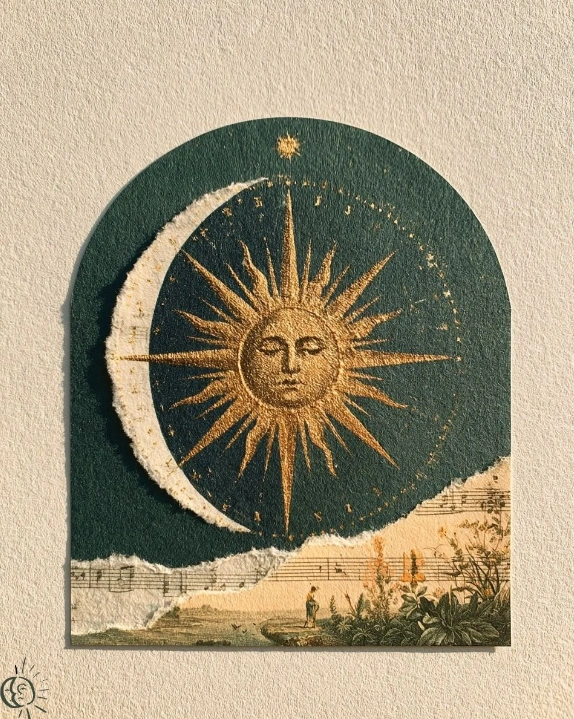
DayNight was born somewhere here. A place where different languages look at the same human experience. What stands at the centre here will not be dry knowledge; it will be the thing we live. Because perhaps we all carry far more similar stories than we imagine. And sometimes the road back to ourselves runs through the places we have been avoiding.